
Call PestGuardians in New Hampshire to discuss silverfish control, tracking New Hampshire's older, moisture-prone basements, across all 50 cities we cover statewide.
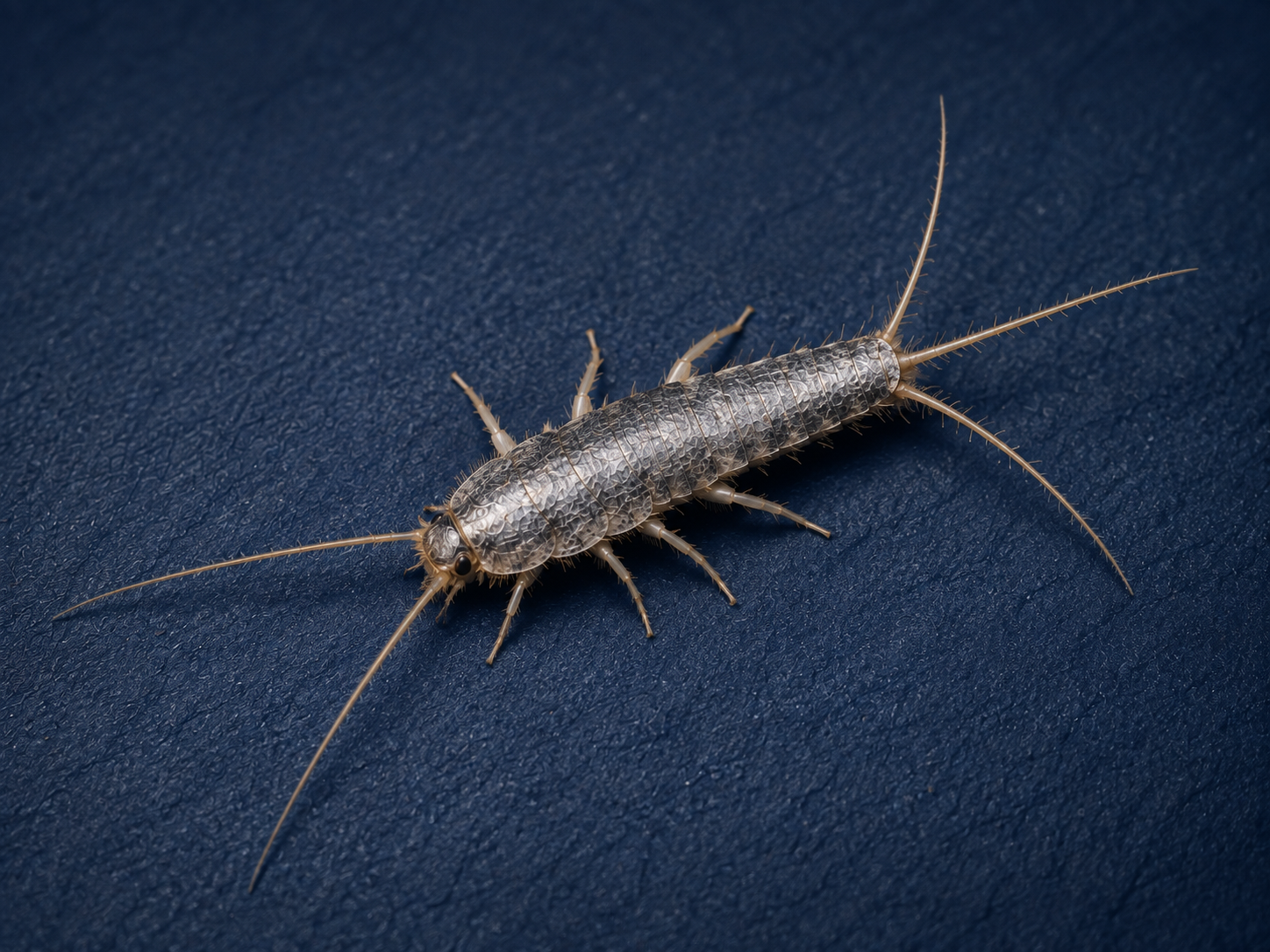
Call (844) 924-1337Paper, book bindings, wallpaper paste, and starchy fabric fibers are what silverfish actually feed on once they're established, which makes them a particular headache in home offices, basement storage rooms, and older New Hampshire homes where family records or old books have sat for years.
They get established in the first place because so many New Hampshire basements offer exactly the damp, humid conditions silverfish need, older ones especially, built before vapor barriers and sump pumps were standard, and even more so in houses set into a hillside or resting on a fieldstone foundation that never fully keeps ground moisture out. A long, damp mud season every spring on top of humid summers keeps that basement moisture elevated for a meaningful stretch of the year, giving silverfish more of a window to take hold than a drier state would allow, which is why solving a New Hampshire silverfish problem usually comes down to fixing the underlying basement humidity just as much as treating for the bugs themselves. Call (844) 924-1337 for silverfish control questions and availability in your part of New Hampshire.
We haven't yet built individual city pages pairing Silverfish Control with a specific New Hampshire city, the way we have for a few other states, so there's no per-city detail to report honestly in this section right now. What you read above is real, New Hampshire-specific research, drawn from the actual conditions that drive demand statewide, not a generic description recycled from another state's page, but it isn't broken down city by city yet.
Call with your city to discuss the pest concern and check local service availability.
As city-level Silverfish Control pages go live for New Hampshire, this section will update to reflect genuine local details the same way it already does for some other states. We'd rather tell you that plainly than invent a city-by-city breakdown that doesn't exist yet.
Call to discuss silverfish control and check service availability in your part of New Hampshire.
Call (844) 924-1337A Commercial Applicator license from New Hampshire's Division of Pesticide Control, part of the Department of Agriculture, Markets and Food, is the credential required before silverfish control can proceed lawfully, and the specific category matters. Category F1 covers general household and structural pest work and requires its own exam separate from the state's other pesticide categories. Two other categories exist for genuinely different work: F2 for mosquito and black fly control, and F3 for termite and wood destroying insect treatment. Larger nuisance wildlife, raccoons, squirrels, and bats specifically, runs through an entirely separate system, the New Hampshire Fish and Game Department's Wildlife Control Operator program, not pesticide licensing at all. For the full explanation of how New Hampshire's licensing works, see our New Hampshire coverage page.
Call anyway; we maintain coverage that is not always reflected yet in every city page.
Many older basements were built before modern vapor barriers and sump pump systems were standard, particularly homes on a fieldstone foundation or built into a hillside that never fully seal out ground moisture, exactly the damp, humid environment silverfish need to establish.
It's worth asking. New Hampshire requires a Commercial Applicator license in Category F1 for general household and structural work, issued through the Division of Pesticide Control. Before booking, ask which credentials apply to the proposed work and how to confirm them with the issuing authority.
No. Pricing varies by city, the specifics of the job, and whether you need a one-time visit or an ongoing plan. Ask about the proposed scope and costs before deciding to book. Call to discuss the work needed and request a quote for your property.
Use the city grid below to view your city's own Silverfish Control page as it becomes available, or call (844) 924-1337 with your city to discuss the problem and check service availability.
Call to check service availability in your area. Free to call, with no obligation to book.