
Wasp removal for Surprise, where paper wasps build under patio covers across newer subdivisions and tarantula hawks turn up on the city's remaining open ground.
Call (844) 924-1337New construction keeps producing fresh eaves and patio covers for paper wasps to claim across Surprise, and the city's rapid growth means that supply hasn't slowed down much. Their umbrella shaped nests show up on homes built last year just as readily as ones built a decade ago. Tarantula hawks stick to a different part of town, the vacant and undeveloped parcels still waiting for houses, where they patrol low over blooming desert plants instead of nesting on a structure.
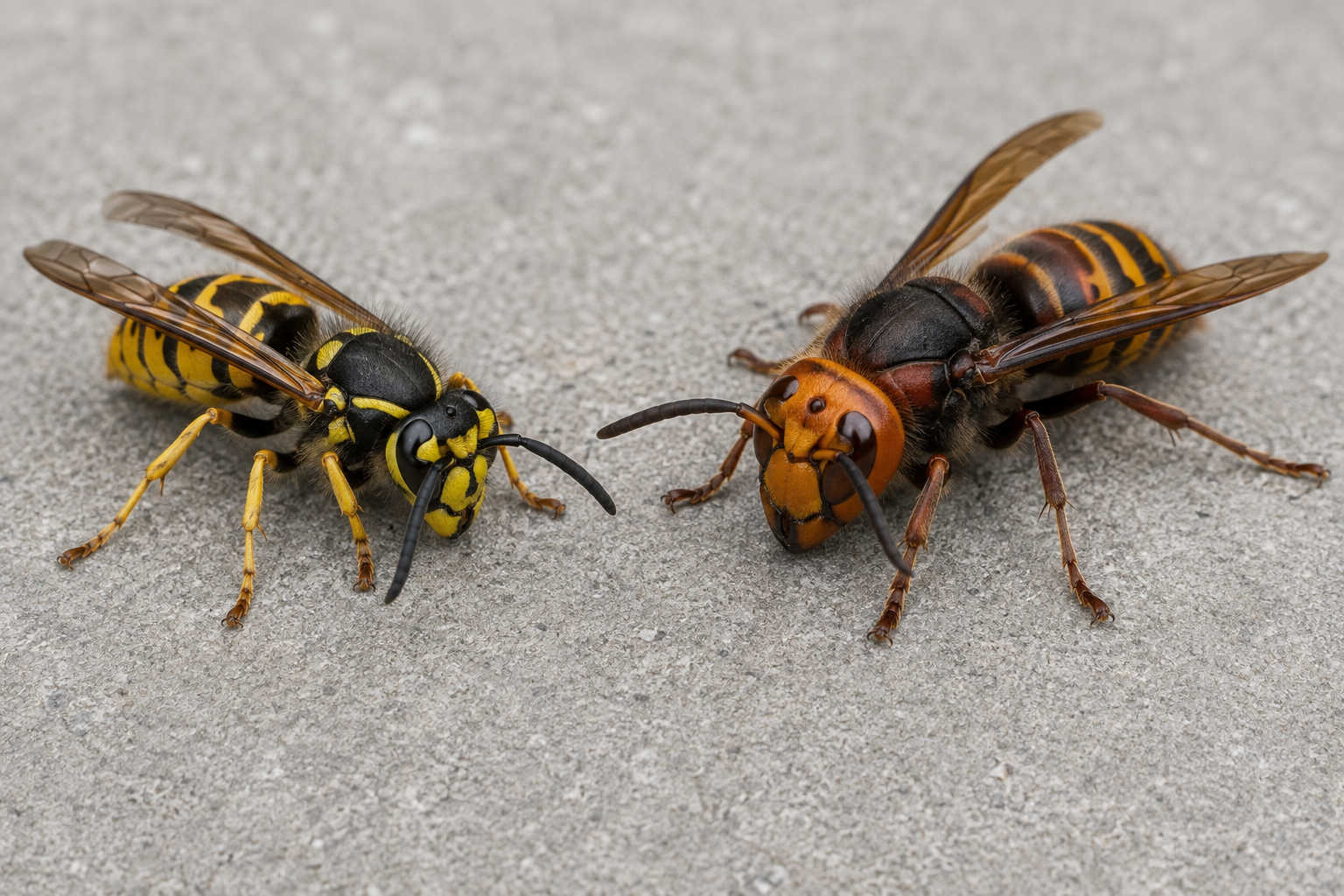
That distinction, structure versus open ground, is usually the fastest way to guess which wasp is involved before a professional even arrives. Tarantula hawks hunt tarantulas rather than bothering residents, but a sting from one is often ranked as among the most painful an insect can inflict, which is reason enough to leave identification and removal to someone with the right equipment. Call (844) 924-1337 to discuss pest control help in Surprise and check service availability.
Call PestGuardians to discuss your pest concern and check local service availability.
See all services available in Surprise · See Wasp & Hornet Removal details
It depends on the species and where the nest is located, but generally involves treating the nest directly with the right product and protective equipment, then removing it once activity has stopped. Because stinging insects can react defensively, this is usually safer left to a professional, especially for larger or hard-to-reach nests.
Most wasp colonies die off over winter, and an old nest is typically abandoned by the workers that built it. An empty-looking nest may still require assessment; if activity is uncertain, keep your distance and ask about inspection before disturbing it.
Paper wasp nests are often smaller and more exposed, commonly found under eaves or overhangs, but they can still sting if disturbed. Treating the nest directly and removing it once activity stops is the general approach, ideally handled by someone with proper protective equipment.
Locating the nest is the first step, since treating individual wasps without addressing the nest usually just means more show up. Species identification and nest location help determine the appropriate removal approach; avoid disturbing an active nest.
Call to check service availability in your area. Free to call, with no obligation to book.