
Call PestGuardians in Vermont to discuss flea and tick control, addressing the nation's second-highest Lyme disease rate, across all 50 cities we cover statewide.
Call (844) 924-1337Only one state reports a higher Lyme disease rate than Vermont, and testing by the Vermont Department of Health found that roughly half the blacklegged deer ticks collected statewide between 2020 and 2024 carried the bacterium that causes it.
That risk isn't spread evenly across the state: Addison County records Vermont's highest density of adult ticks, while Rutland County leads in nymphs, the tiny, easily missed stage responsible for most human bites. For homeowners in these southwestern counties especially, tick control, mowed perimeters, mulch barriers, targeted treatment along tree lines, has stopped being a lawn care extra and become a direct response to a documented, rising public health risk, a very different motivation than the pet-driven flea concerns behind most calls elsewhere in the state. Call (844) 924-1337 for flea & tick control questions and availability in your part of Vermont.
We haven't yet built individual city pages pairing Flea & Tick Control with a specific Vermont city, the way we have for a few other states, so there's no per-city detail to report honestly in this section right now. What you read above is real, Vermont-specific research, drawn from the actual conditions that drive demand statewide, not a generic description recycled from another state's page, but it isn't broken down city by city yet.
Call with your city to discuss the pest concern and check local service availability.
As city-level Flea & Tick Control pages go live for Vermont, this section will update to reflect genuine local details the same way it already does for some other states. We'd rather tell you that plainly than invent a city-by-city breakdown that doesn't exist yet.
Call to discuss flea & tick control and check service availability in your part of Vermont.
Call (844) 924-1337Flea & Tick Control in Vermont means holding pesticide applicator certification through the Agency of Agriculture, Food and Markets, with structural work certified under Category 7a, General (Structural) Pest Control. Getting there means passing the CORE exam on general pesticide safety plus the category exam itself, and commercial applicators have to work under a licensed pesticide business to treat someone else's property. Certification runs on a five-year cycle, renewed with sixteen hours of continuing education credits. For the full explanation of how Vermont's licensing works, see our Vermont coverage page.
Call anyway; we maintain coverage that is not always reflected yet in every city page.
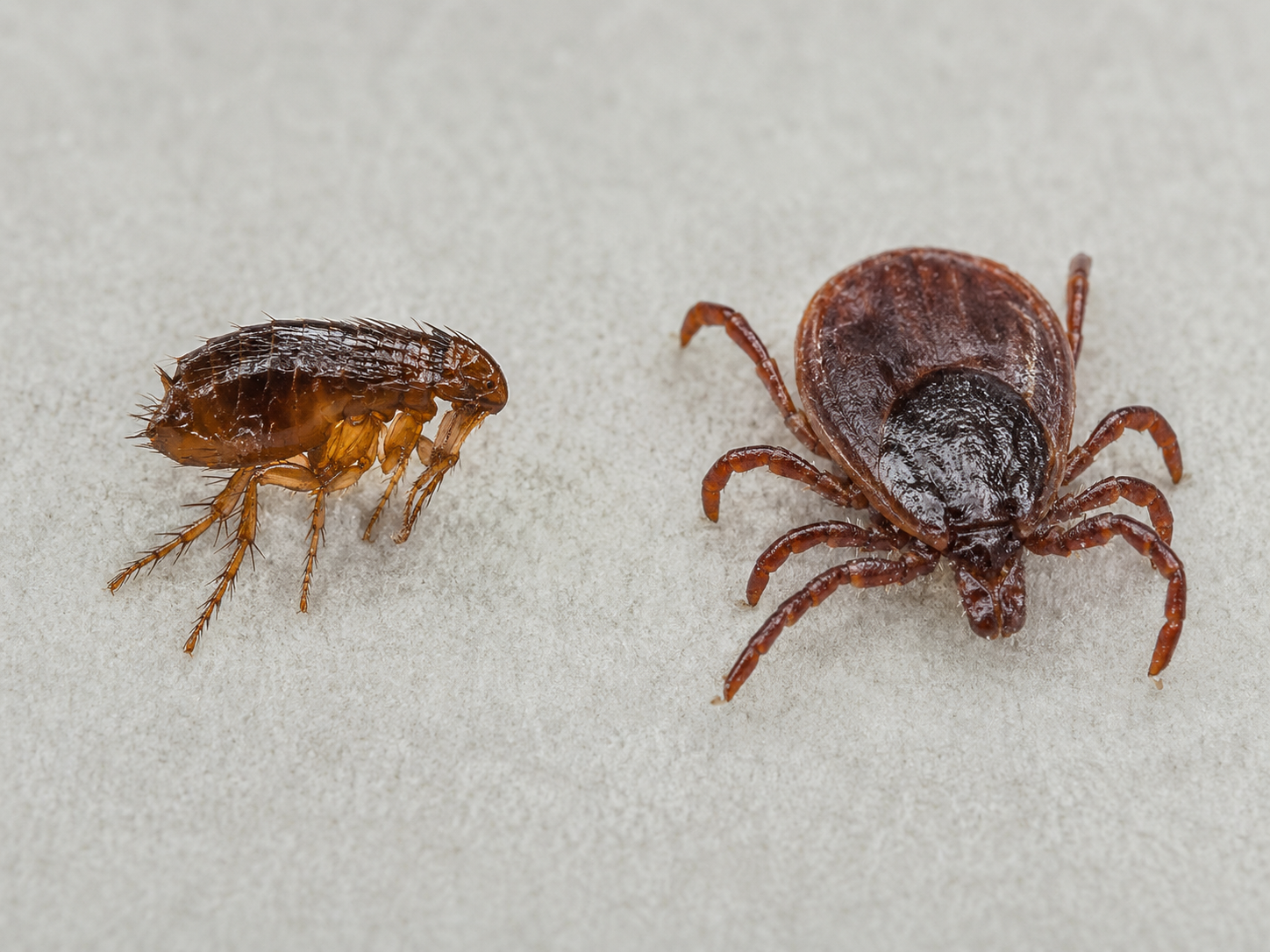
Addison County records the state's highest density of adult ticks, and Rutland County leads in nymphs, the tiny stage responsible for most human bites, making tick control in these southwestern counties a direct public health response rather than a lawn care add-on.
It's worth asking. Vermont requires pesticide applicator certification through the Agency of Agriculture, Food and Markets, with structural pest work certified under Category 7a, General (Structural) Pest Control. Before booking, ask which credentials apply to the proposed work and how they can be confirmed.
No. Pricing varies by city, the specifics of the job, and whether you need a one-time visit or an ongoing plan. Ask about the proposed scope and costs before deciding to book. Call to discuss the work needed and request a quote for your property.
Use the city grid below to view your city's own Flea & Tick Control page as it becomes available, or call (844) 924-1337 with your city to discuss the problem and check service availability.
Call to check service availability in your area. Free to call, with no obligation to book.