
Call PestGuardians in Utah to discuss flea and tick control, addressing a tick-borne risk tied to elevation, not humidity, across all 50 cities we cover statewide.
Call (844) 924-1337Three states, Colorado, Utah, and Montana, account for the large majority of the country's documented cases of Colorado tick fever, a virus carried by the Rocky Mountain wood tick that shows up almost exclusively at elevations roughly between 4,000 and 10,000 feet, a mountain specific health risk that flatter, lower elevation states simply never see.
Utah's Department of Health takes it seriously enough to publish a dedicated fact sheet on the disease, since the state's mountain communities sit right in the elevation band where the Rocky Mountain wood tick stays most active, generally March through July. That's a fundamentally different tick borne disease risk than the Lyme disease concern people associate with the Northeast, and it ties flea and tick control in Utah's higher elevation towns and canyon neighborhoods to a health consideration rooted in altitude rather than the humidity or ground cover explanations that drive tick risk elsewhere. Call (844) 924-1337 for flea & tick control questions and availability in your part of Utah.
We haven't yet built individual city pages pairing Flea & Tick Control with a specific Utah city, the way we have for a few other states, so there's no per-city detail to report honestly in this section right now. What you read above is real, Utah-specific research, drawn from the actual conditions that drive demand statewide, not a generic description recycled from another state's page, but it isn't broken down city by city yet.
Call with your city to discuss the pest concern and check local service availability.
As city-level Flea & Tick Control pages go live for Utah, this section will update to reflect genuine local details the same way it already does for some other states. We'd rather tell you that plainly than invent a city-by-city breakdown that doesn't exist yet.
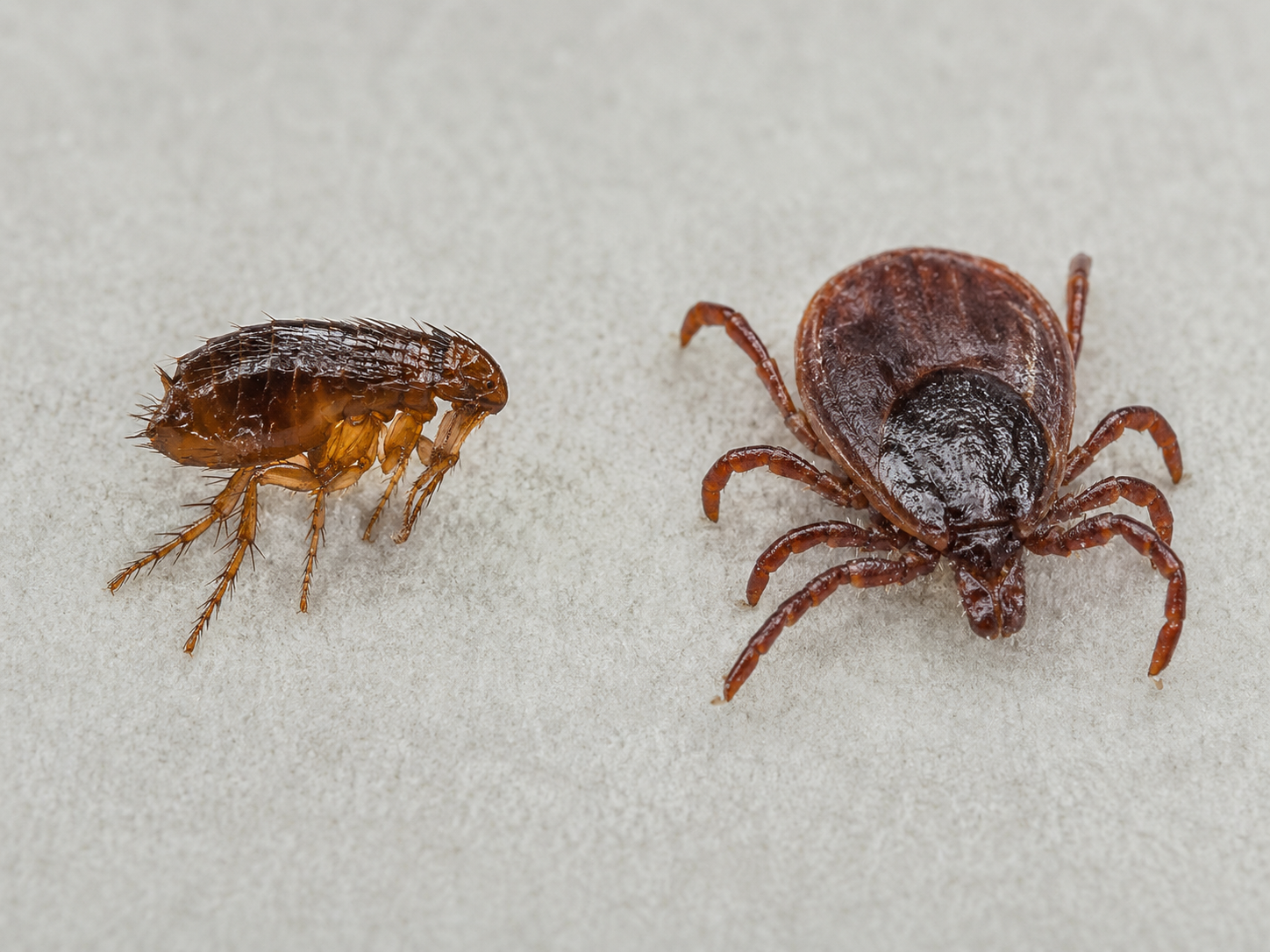
Call to discuss flea & tick control and check service availability in your part of Utah.
Call (844) 924-1337Flea & Tick Control in Utah means holding one of three individual license types, Commercial, Non-Commercial, or Private Applicator, whichever matches the work, plus certification in the specific category that covers it, both issued through the Department of Agriculture and Food's pesticide applicator program. Household and building pest work falls under the Structural and Health Related category, kept separate from the Agriculture Plant, Agriculture Animal, Forest, Ornamental and Turf, and Right of Way categories that govern other kinds of pesticide use in the state. For the full explanation of how Utah's licensing works, see our Utah coverage page.
Call anyway; we maintain coverage that is not always reflected yet in every city page.
No. Utah's mountain communities sit in the elevation band, roughly 4,000 to 10,000 feet, where the Rocky Mountain wood tick spreads Colorado tick fever, a fundamentally different disease risk tied to altitude rather than the Lyme disease concern associated with the Northeast.
It's worth asking. Utah requires Commercial, Non-Commercial, or Private Applicator licensing through the Department of Agriculture and Food, with certification specifically in the Structural and Health Related category for this kind of work. Before booking, ask which credentials apply to the proposed work and how to confirm them with the issuing authority.
No. Pricing varies by city, the specifics of the job, and whether you need a one-time visit or an ongoing plan. Ask about the proposed scope and costs before deciding to book. Call to discuss the work needed and request a quote for your property.
Use the city grid below to view your city's own Flea & Tick Control page as it becomes available, or call (844) 924-1337 with your city to discuss the problem and check service availability.
Call to check service availability in your area. Free to call, with no obligation to book.