
Call PestGuardians in North Carolina to discuss flea and tick control, addressing an emerging tick-borne allergy risk, across all 50 cities we cover statewide.
Call (844) 924-1337Can a tick bite change what someone is able to eat for the rest of their life? In North Carolina, increasingly, the answer is yes. The lone star tick, common and still spreading through the state, is now tied to alpha gal syndrome, a rare allergy that turns red meat into something the body can no longer tolerate after even a single bite. Case counts have been climbing in recent years according to scientists working partly in this region, adding an urgency to tick prevention that Lyme disease, the concern more familiar farther north, never quite carried on its own.
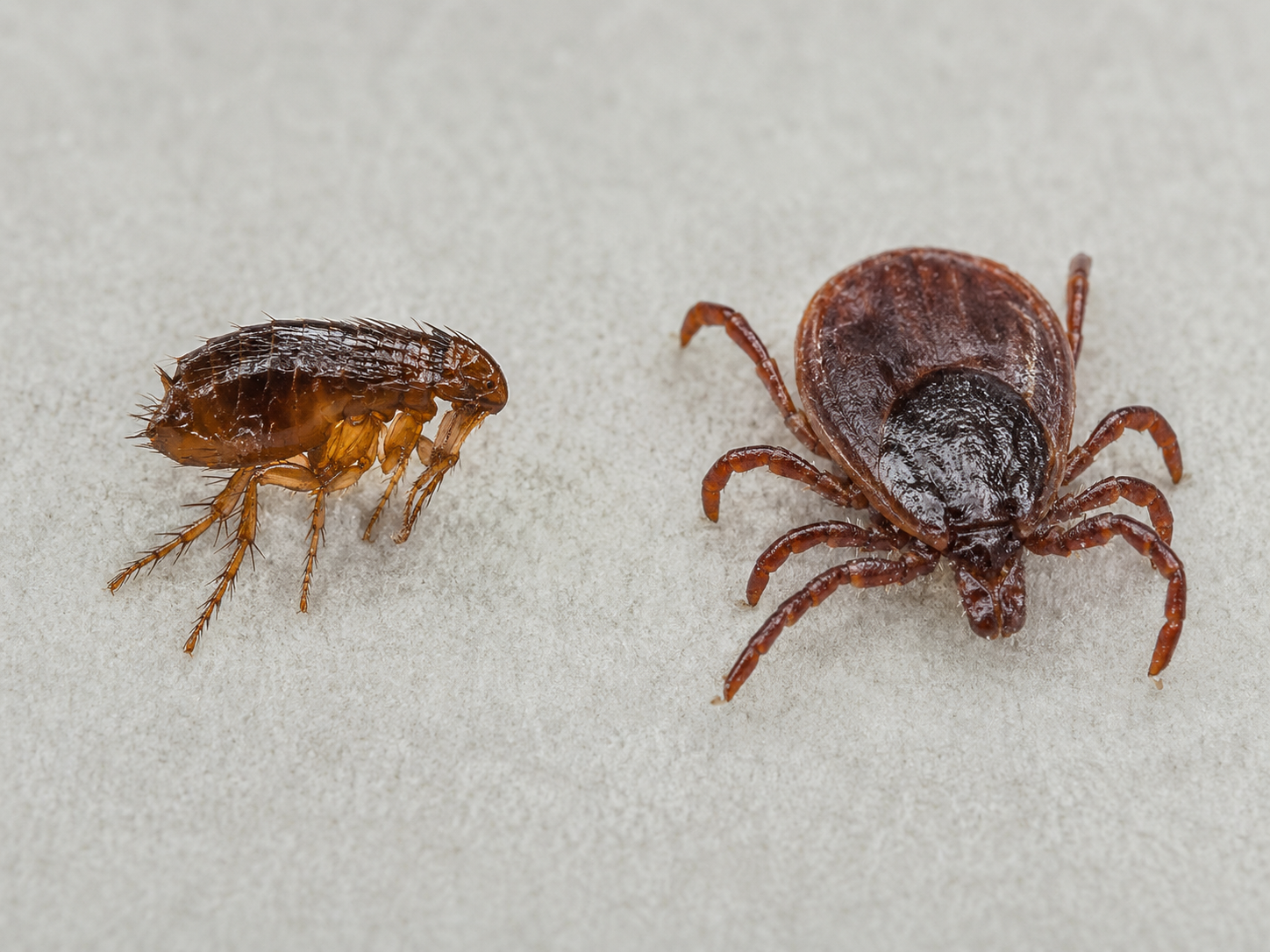
Fleas, by comparison, stay a quieter, more predictable problem: mostly indoors, tracking pet ownership more than tick habitat. North Carolina's warmth still stretches their active season well past what colder states get, and near the coast and across the Piedmont, where winters run mild, flea populations sometimes see almost no real dieoff at all. Put a long flea season with barely any natural interruption next to a rising tick borne allergy risk, and pest pressure from these two sources rarely lets up for long anywhere in the state. Call (844) 924-1337 for flea & tick control questions and availability in your part of North Carolina.
We haven't yet built individual city pages pairing Flea & Tick Control with a specific North Carolina city, the way we have for a few other states, so there's no per-city detail to report honestly in this section right now. What you read above is real, North Carolina-specific research, drawn from the actual conditions that drive demand statewide, not a generic description recycled from another state's page, but it isn't broken down city by city yet.
Call with your city to discuss the pest concern and check local service availability.
As city-level Flea & Tick Control pages go live for North Carolina, this section will update to reflect genuine local details the same way it already does for some other states. We'd rather tell you that plainly than invent a city-by-city breakdown that doesn't exist yet.
Call to discuss flea & tick control and check service availability in your part of North Carolina.
Call (844) 924-1337North Carolina licenses structural pest work through the Department of Agriculture and Consumer Services' Structural Pest Control Division, and flea & tick control falls under Phase P, the category covering household pests like ants, roaches, and rodents. An applicator has to work up through registered technician and certified applicator status, documenting two years of hands on experience in that specific phase, before the business itself can hold a Structural Pest Control License. The state charges $200 for a business's first licensed phase and $75 for each additional phase beyond that, since Phase W, wood destroying organisms like termites, and Phase F, fumigation, are separately licensed categories requiring their own experience and fees. Wildlife removal, trapping or excluding an animal like a raccoon, squirrel, or bat, runs on a completely separate system through the North Carolina Wildlife Resources Commission rather than the Department of Agriculture. For the full explanation of how North Carolina's licensing works, see our North Carolina coverage page.
Call anyway; we maintain coverage that is not always reflected yet in every city page.
The lone star tick, common and expanding across the state, has been linked to alpha-gal syndrome, a red meat allergy that can develop after a single bite, adding urgency to tick prevention beyond the more familiar Lyme disease concern found farther north.
It's worth asking. North Carolina requires Phase P certification under the Structural Pest Control Division for general household pest work, which takes two years of documented experience before a business can be licensed. Before booking, ask which credentials apply to the proposed work and how to confirm them with the issuing authority.
No. Pricing varies by city, the specifics of the job, and whether you need a one-time visit or an ongoing plan. Ask about the proposed scope and costs before deciding to book. Call to discuss the work needed and request a quote for your property.
Use the city grid below to view your city's own Flea & Tick Control page as it becomes available, or call (844) 924-1337 with your city to discuss the problem and check service availability.
Call to check service availability in your area. Free to call, with no obligation to book.