
Gnat and fruit fly control for Centennial, driven by Colorado's strong indoor houseplant culture rather than the composting mandate that applies specifically inside Denver's own city limits.
Call (844) 924-1337Indoor houseplants are especially popular across Colorado, partly because a shorter outdoor growing season pushes more gardening indoors for more of the year, and that habit is the more likely source behind a Centennial gnat problem. Fungus gnats breed readily in potting soil that's kept consistently moist by regular watering, a steady, year round source that has nothing to do with any single city's trash or recycling rules.
A second, newer factor is showing up more broadly across the Denver metro area as more cities move toward requiring composting access at multifamily buildings and food businesses, Denver's own Universal Recycling and Composting Ordinance being the most visible example starting in 2026, since organic waste sitting in a building rather than going straight to the trash gives fruit flies and drain flies a breeding opportunity they didn't have before. Centennial is its own separately incorporated city and isn't bound by Denver's specific rule, but the same regional shift is worth being aware of. For most Centennial households, checking the houseplants first is still the more useful starting point. Call (844) 924-1337 to discuss pest control help in Centennial and check service availability.
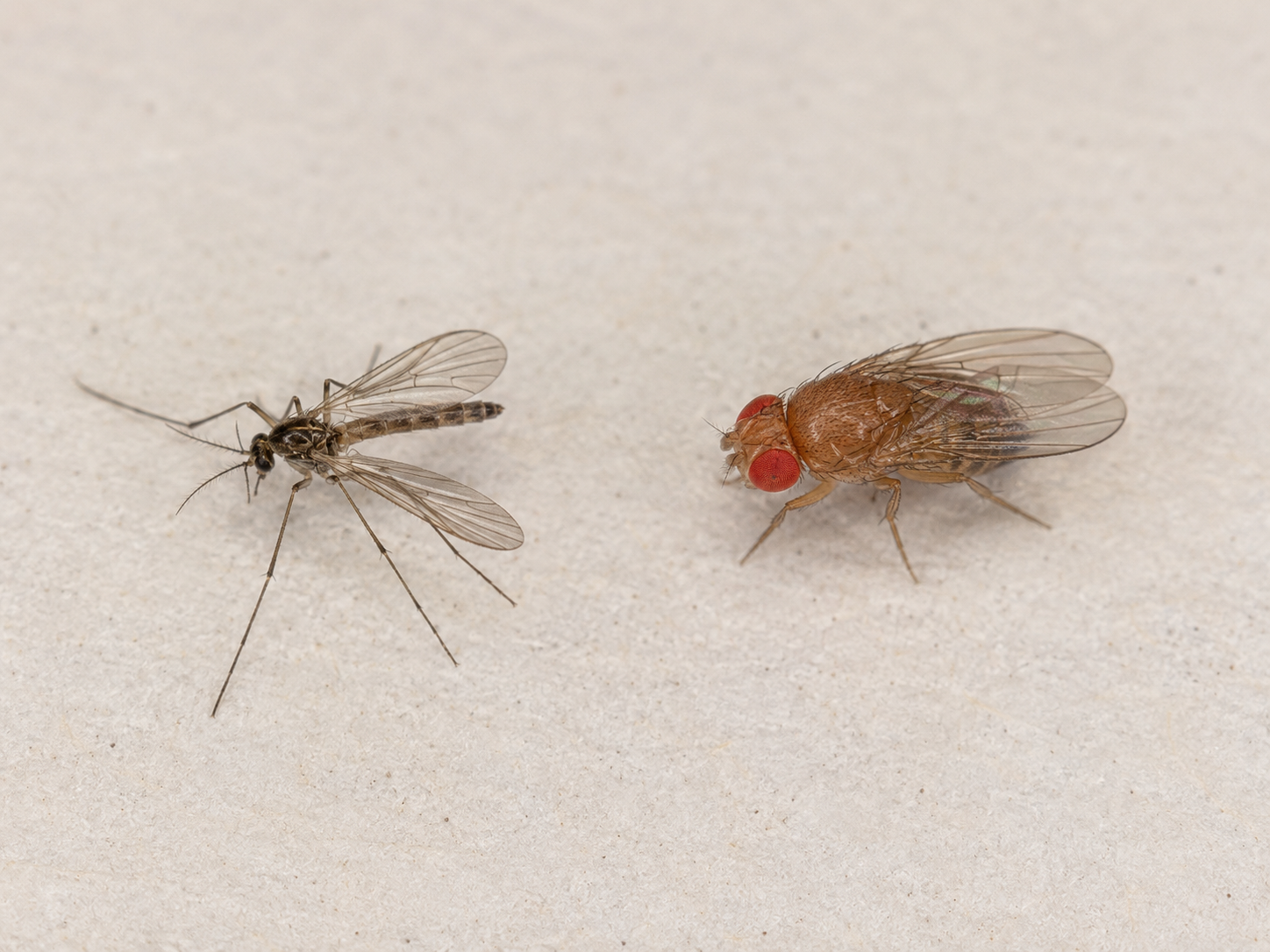
Call PestGuardians to discuss your pest concern and check local service availability.
See all services available in Centennial · See Gnat & Fruit Fly Control details
Finding and eliminating the breeding source, whether that's overripe produce, a drain, or the garbage disposal, matters more than swatting the flies you can see. Traps can help reduce the adult population while you address the source, but a recurring problem often means the source hasn't fully been found yet.
Note where the flies gather, including any activity around plant containers, drains, and compost storage. Describe whether the problem is limited to one area or appears in several places, and what cleaning or watering changes you have already tried. That record helps focus the search for the source without assuming every small fly is a fruit fly.
Explain which area you cleaned, whether sightings decreased, and where flies appeared again. Mention whether activity stayed near the original spot or shifted elsewhere. Ask whether another breeding source needs checking before repeating the same approach; fewer visible adults alone does not establish that the source has been addressed.
Fruit flies and fungus gnats have different sources, produce and drains for fruit flies, overwatered houseplant soil for gnats, so treating both effectively means identifying which you actually have. Identifying which flies are present helps focus the inspection and treatment on the correct breeding source.
Call to check service availability in your area. Free to call, with no obligation to book.