
Wasp and hornet removal for Rogers, where late summer property work runs into peak nest season.
Call (844) 924-1337Late summer is when bald faced hornet and ground nesting yellowjacket colonies reach peak size and defensiveness anywhere in Arkansas, and Rogers adds its own twist: newer subdivisions built out toward the edge of Benton County's remaining farmland and poultry operations put plenty of homes within reach of the overgrown brush and fence lines those colonies prefer. Property upkeep out there, mowing back a fence row, clearing brush at the treeline, tends to fall on the same late summer schedule that colonies are hitting their peak.
Because those newer properties sit right at the boundary between finished lawn and unmanaged farmland edge, a nest can grow for weeks along a fence line before anyone doing yard work actually finds it, and that lag is a big reason Rogers sees a spike in these calls during the same few late summer weeks every year. Call (844) 924-1337 to discuss pest control help in Rogers and check service availability.
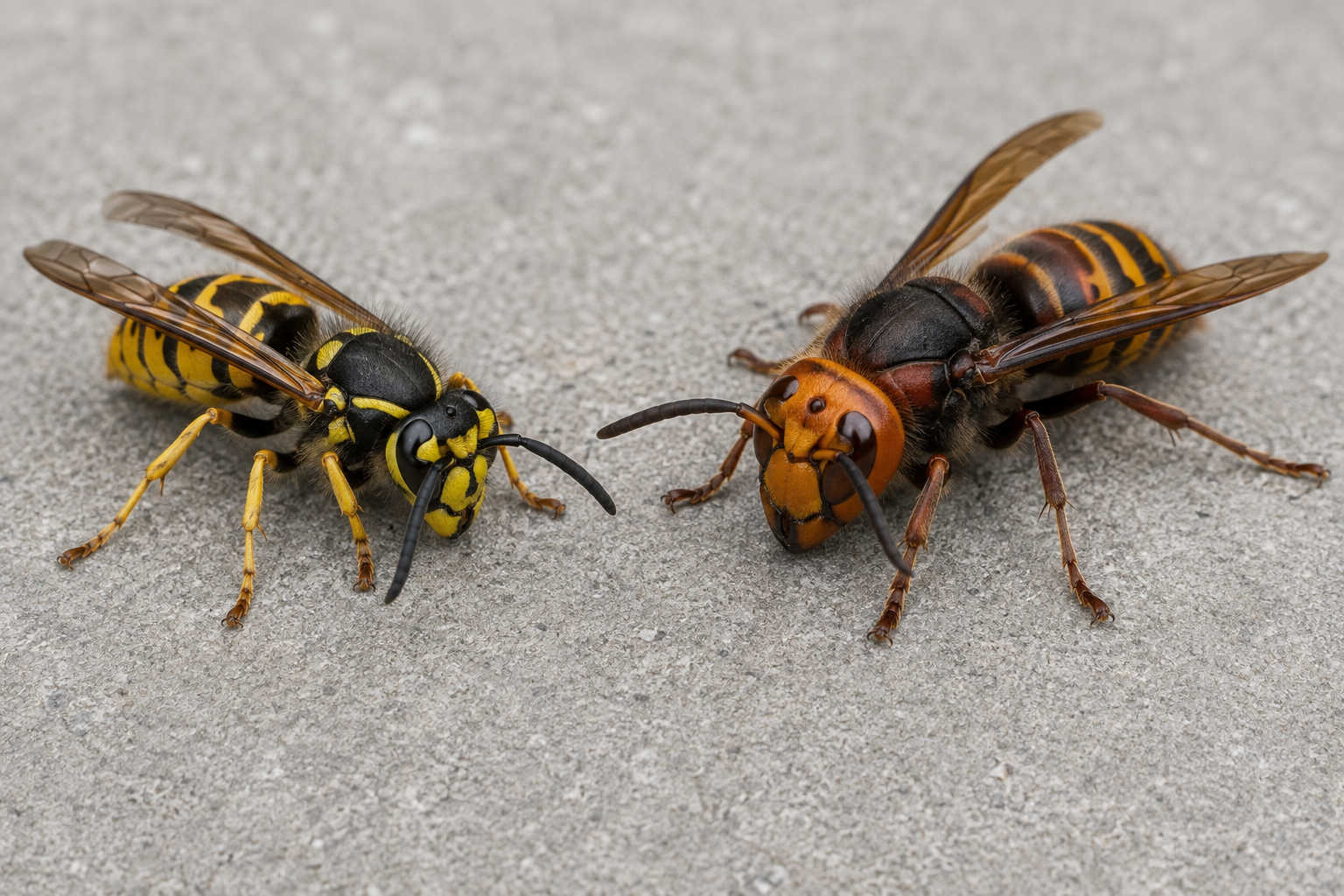
Call PestGuardians to discuss your pest concern and check local service availability.
See all services available in Rogers · See Wasp & Hornet Removal details
It depends on the species and where the nest is located, but generally involves treating the nest directly with the right product and protective equipment, then removing it once activity has stopped. Because stinging insects can react defensively, this is usually safer left to a professional, especially for larger or hard-to-reach nests.
Most wasp colonies die off over winter, and an old nest is typically abandoned by the workers that built it. An empty-looking nest may still require assessment; if activity is uncertain, keep your distance and ask about inspection before disturbing it.
Paper wasp nests are often smaller and more exposed, commonly found under eaves or overhangs, but they can still sting if disturbed. Treating the nest directly and removing it once activity stops is the general approach, ideally handled by someone with proper protective equipment.
Locating the nest is the first step, since treating individual wasps without addressing the nest usually just means more show up. Species identification and nest location help determine the appropriate removal approach; avoid disturbing an active nest.
Call to check service availability in your area. Free to call, with no obligation to book.