
Wasp removal for Buckeye eaves and patios, plus the native tarantula hawks drawn to the city's open desert acreage.
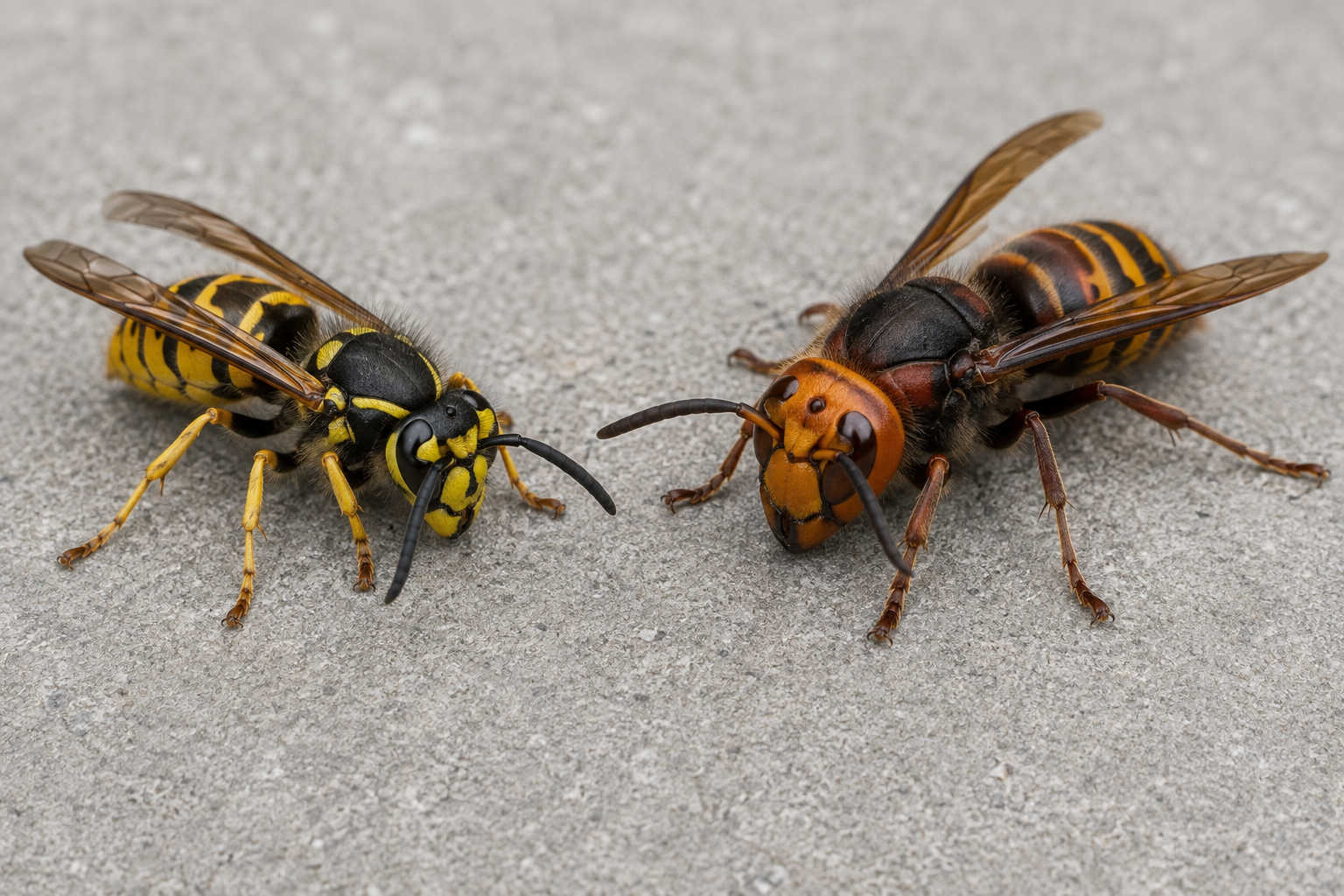
Call (844) 924-1337Unlike the eastern and midwestern United States, the desert Southwest has no true hornet species living here, so what shows up around Buckeye homes is almost always paper wasps. Several paper wasp species build their rounded, umbrella style nests tucked under patio covers, roof eaves, and even playground equipment, and they turn up just as often on brand new subdivision porches as they do on older farmhouses near the Buckeye Canal. Buckeye's wide open land, much of it still desert or working farmland, also gives room for tarantula hawks, one of the largest wasps found anywhere in North America and a species that actually belongs here.
Tarantula hawks hunt tarantulas, not people, though their sting is often ranked among the most painful of any insect on the continent. They favor blooming plants like mesquite and milkweed and show up most in the hotter months, cruising low over open ground while males stake out territory, the kind of open desert patches that still sit between Buckeye's newer neighborhoods. Because homeowners often mistake either insect for a hornet or yellowjacket, sorting out which species is actually present is usually the first step before any treatment happens. Call (844) 924-1337 to discuss pest control help in Buckeye and check service availability.
Call PestGuardians to discuss your pest concern and check local service availability.
See all services available in Buckeye · See Wasp & Hornet Removal details
It depends on the species and where the nest is located, but generally involves treating the nest directly with the right product and protective equipment, then removing it once activity has stopped. Because stinging insects can react defensively, this is usually safer left to a professional, especially for larger or hard-to-reach nests.
Most wasp colonies die off over winter, and an old nest is typically abandoned by the workers that built it. An empty-looking nest may still require assessment; if activity is uncertain, keep your distance and ask about inspection before disturbing it.
Paper wasp nests are often smaller and more exposed, commonly found under eaves or overhangs, but they can still sting if disturbed. Treating the nest directly and removing it once activity stops is the general approach, ideally handled by someone with proper protective equipment.
Locating the nest is the first step, since treating individual wasps without addressing the nest usually just means more show up. Species identification and nest location help determine the appropriate removal approach; avoid disturbing an active nest.
Call to check service availability in your area. Free to call, with no obligation to book.